2025: A Year in Review
YouTube
In 2025, I produced 32 full-length videos, down from 47 in 2024. Real-life events naturally impacted my “gas in the tank,” but the statistics tell an interesting story of how the audience is evolving. Since YouTube’s Year in Review stats email is a shadow of its former self, I had to manually retrieve the statistics this year.
-
Views: 1.2M (↑ 12% increase)
-
Watch time: ↓ 15% decrease
-
Subscriber Growth: +2,600 (a 19% slowdown compared to 2024)
-
Engagement: 1,426 comments personally responded to.
The increase in views and decrease in watch time are probably due to Shorts.
Currently, 54% of my views come from long-form content and 45% from Shorts. However, the “bridge” between the two remains elusive:
-
45% of you watch long-form only.
-
34% watch Shorts only.
-
Only 21% watch both.
While YouTube suggests Shorts act as a discovery engine for long-form content, my data suggests two distinct audiences. Moving forward, I’ll continue to treat them as two different ways to share content.
I saw a decrease of watchtime of 15% and 19% less growth in terms of subscribers, with 2,600 additional followers.
The second half of the year was certainly better statistics-wise than the first half. This makes total sense, as I didn’t have as much time for creating in the first half of 2025.
Thankfully, I don’t create for the sake of “feeding the algorithm.” I create to preserve history and share a passion. Every cent the channel earns is reinvested into new acquisitions and better filming gear to make the next year even better.
Web
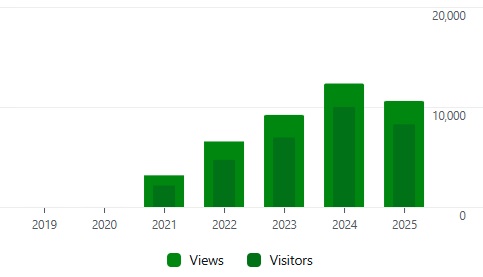
Website visits were down, but I also know that AI has been very busy crawling this website and my YouTube content. I discovered this when using it to conduct some research, and my material was appearing in the AI results as sources.
A special shoutout to the many users over on Mastodon who interact with my content. I find lately that some of the better interactions are happening over there. If you want some solid retro computing content, there are few places currently better to be, it seems.
January
I spent a lot of time at the start of the year talking about the TrackPoint on this website. The release of the ThinkPad X9 shook many die-hard ThinkPad fans with the exclusion of the TrackPoint, and later in the year, the reintroduction of the colour white. Several would incorrectly report this is the first time it was used on a ThinkPad, but viewers and readers here would know that is not the case.
This was a good month for collecting some history. Dan Basterfield gave me the service VHS of the IBM ThinkPad 701c and 760 to share on the channel. I also released Part 1 of a two-part conversation with David Hill about the Design Center he helped create.
February
February was fairly quiet, with the highlight being the second part of the David Hill Design Center chat.
March
March saw the showcase of a pretty rare ThinkPad, the mirage black S30. This is one I was uncertain I’d ever get the chance to feature on the channel, let alone in decent condition. It is hard to imagine that many of these exist at this point that aren’t covered in scratches or have been restored using a variety of processes, none of which I am brave enough to try. Speaking of storing, this is pretty much kept wrapped in soft cloth to help its chances.
April
One thing I don’t get to do often is feature brand new computers, so when Nimo reached out to take a look at one of their laptops, I was happy to see what they were offering. I think they are taking the right inspirations from the better parts of the industry and wish them the best in future efforts.
May
May is what I call a standard month. A few videos were made, nothing earth-shattering.
June
If you follow retro technology or just cool stuff in general and have not heard of polymatt, you owe it to yourself to check out his channel. He graciously sat down with me in June, and we talked about the differences between restoration and other forms of repair. It was a great conversation.
July
July was busier, as the summer months tend to be, as I have a bit more time for projects. I filmed two highlights; one was the Top 5 ThinkPads I Haven’t Filmed Yet, and the other was finally constructing the IBM ThinkPad 701c model kit that I had around the house for years.
The Top 5 video was an important one for me, as there are items in my collection that I want to have in a better state before I showcase them, but balancing that with the realization that I do not have the time, skill or resources sometimes to achieve what I want in the timeframe I’d like. I appreciate those who reached out to provide information and support. I hope to use it soon to move some of these projects further forward. If you have ideas or have knowledge that could help, please reach out.
The model kit was also an interesting project. I was inspired to finish it when Harry McCracken released his article on the 701c, in which he was kind enough to mention the short documentary-style video I did on the 701c a while ago. He acquired both a 701c and a model kit for his article. I knew from a previous LGR video building this model kit that the plastics warp over time, and I knew that the sooner I built it, the better. Fun fact: our videos are exactly 30 seconds different in length. So between those two things, I got around to putting it together and dealing with my own warped plastic issues. I also made a neat YouTube Short that did very well.
As I mentioned closer to the top, this is also where the white version of the ThinkPad X9 was first introduced in China. It is now globally available.
Lastly, I wrote an article reflecting on the retirement of the ThinkPad X1 Fold 16, leaving no foldable PCs currently being manufactured by Lenovo.
August
Linux on ThinkPads is well known. I’ve run Mint on my X220 since 2017. This led to the question of how old you could go with Windows 10, about to lose official support in October. This led to my most successful new video in terms of views and comments in 2025.
August also marked a visual shift for the channel: I updated my thumbnail strategy to better align with modern YouTube discovery while trying to keep my personal aesthetic intact.
I also had another YouTube short do well this month about a disc copying tower. Lots of good jokes about how these were used in the comments made me smile all month long.
September
Back in July, I started a collaboration with David Hill to help him build a Wikipedia page. An interesting challenge, to say the least. I knew enough about Wikipedia to know what the big hurdles were going to be, one being my proximity to the subject and ensuring we abided by their conflict-of-interest and secondary source requirements. However, after working at it for months and providing over 50 references, we were able to land a reviewer who helped us push the page over the finishing line. It was a great opportunity to learn more about David’s whole story and get it down in writing. Granted, Wikipedia has strict citation guidelines, so some things we talked about could not be included due to the lack of references.
I took some time to also write some additional notes I had about the Lenovo Skylight, a very cool smartbook that never saw mass production, designed by Richard Sapper in collaboration with David Hill’s team.
October
After our work on the Wikipedia page, David and I teamed up again to do some work on a project that will likely be announced soon. This work continued for several months as time permitted. It was fun and challenging work.
I also took a quick look at a ThinkPad R52, which, while not the most interesting machine by itself, allowed me to talk about the history and the time it was made, which may have been more engaging than the hardware itself.
November
David Churbuck is a name you will have seen me reference a few times on this website. David Churbuck has held several roles throughout his career, including founding Forbes.com in 1995, before being their senior technology editor. He was brought on by Lenovo in 2005 as the VP of Global Digital Marketing and worked with David Hill to launch the Design Matters blog. David Hill arranged a three-way interview, during which we discussed the blog and various other topics, including what it was like in those early days of the Lenovo acquisition of the PC division from IBM.
David Churbuck has written numerous stories about his experiences on his own website, which is well worth a visit.
I also hit 30,000 subscribers. Although I didn’t have the time for a proper celebration video, the milestone is not lost on me. Thank you to everyone who joined the journey this year.
December
The big highlight for December was the release of the Design Matters interview. David Churbuck posted about it on his blog.
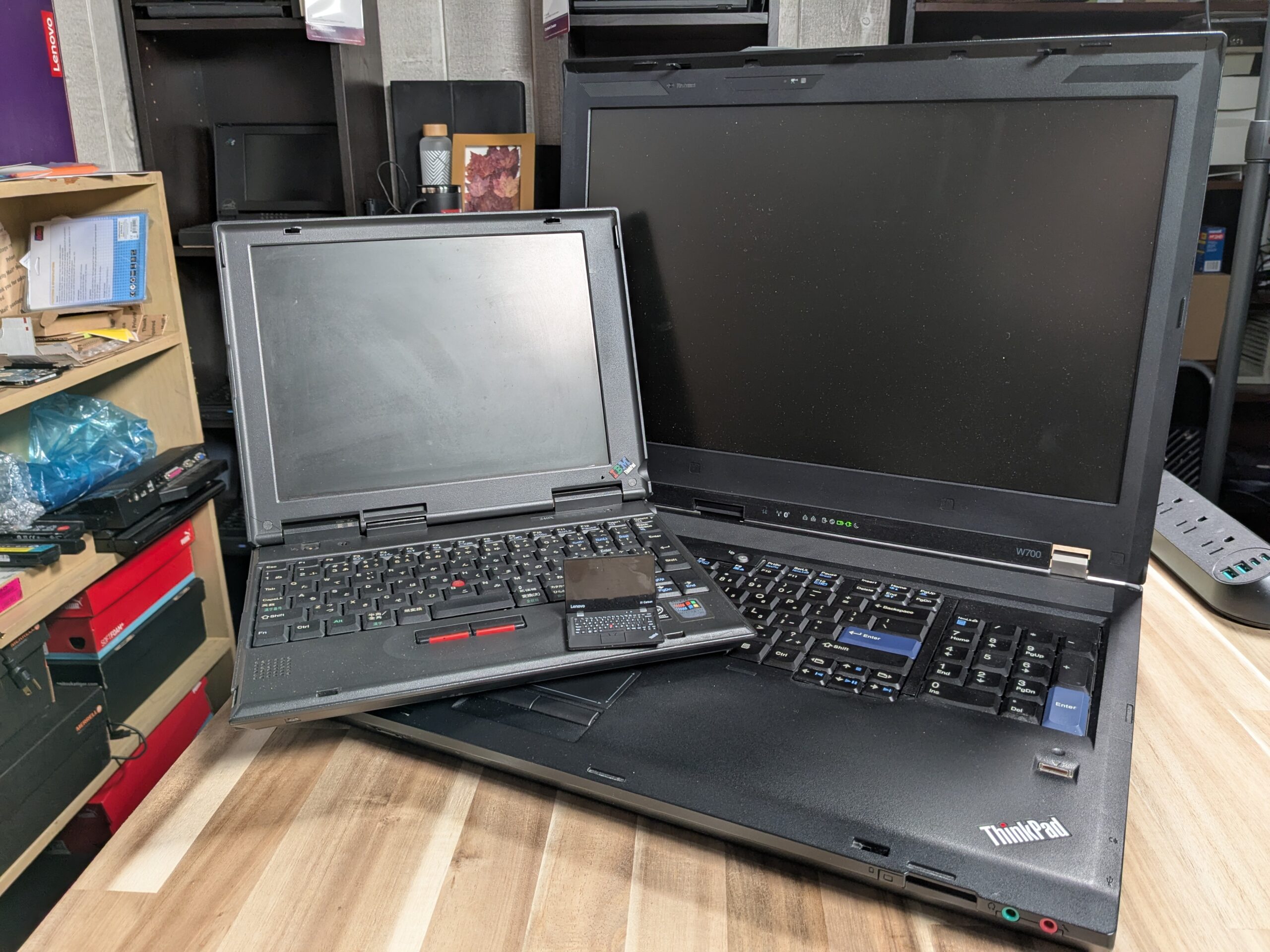
By far the quietest month of the year in terms of content was December. I did manage to acquire a few new machines at the end of the year, but I haven’t finished filming them as I type this article. One was the ThinkPad W700, which needed some work, but I got it for a good price. I did a YouTube Short asking what kind of operating system I should put on: a factory image, Tiny11 (Customized Windows) or Linux.
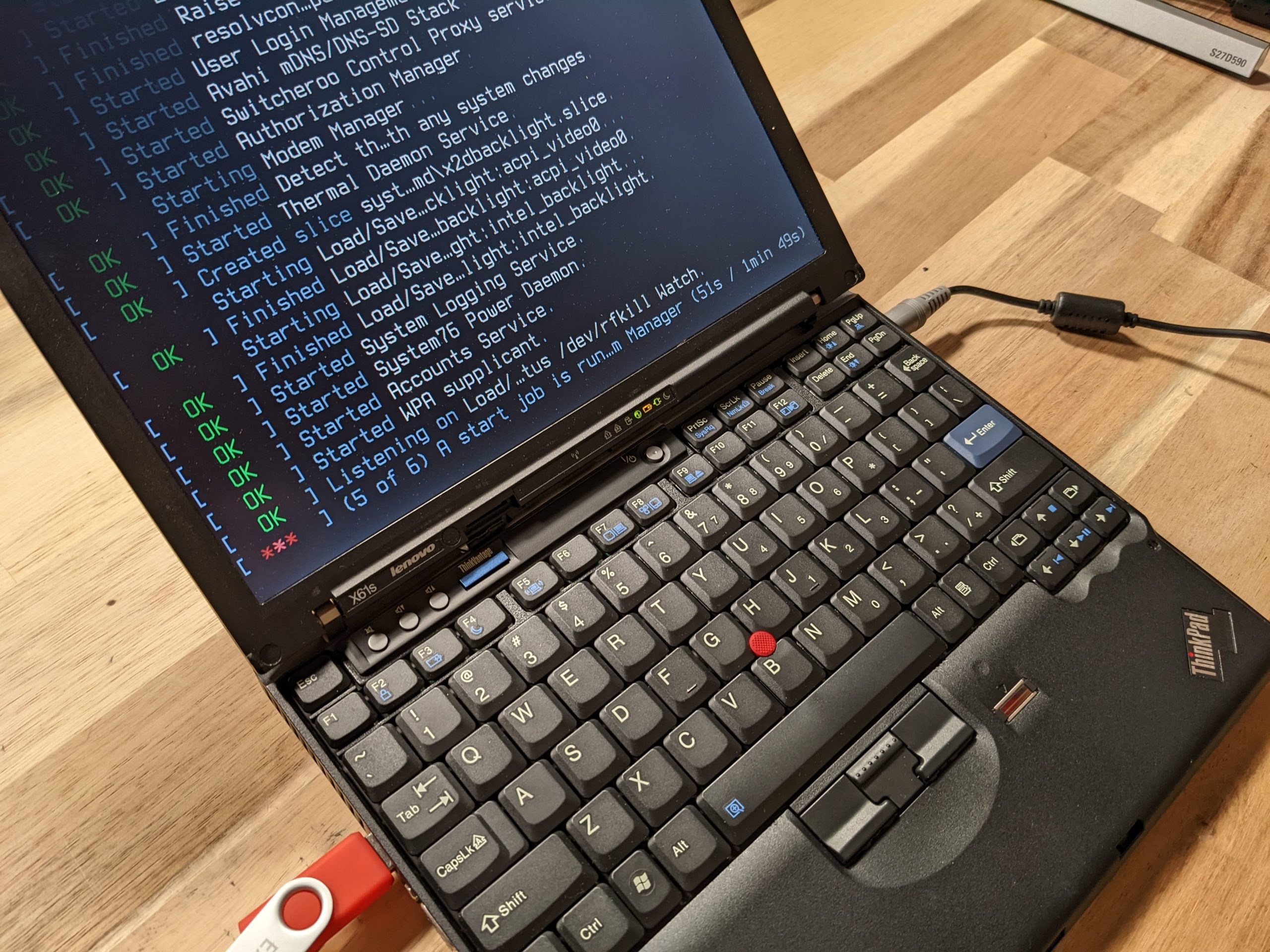
Turns out that the computer decided for me. The factory image didn’t work, failing at the last stages. Tiny11 did not boot into the installer despite several tweaks and changes. MX Linux worked on the first try.
I also did some serious camera upgrades to my filming setup. I replaced the conference camera I was using for my side profile with a Sony FS5 MKI that I got used from Henry’s, a Canadian camera store chain. The conference camera had some great features, but the inability to control the white balance was frustrating and negatively impacted the quality of videos. I don’t hold that against it, as I was pushing it into a role it wasn’t perfectly suited.
The year ended on a sombre note with the passing of Lou Gerstner, who was a central figure at IBM during a very pivotal time, passed away at age 83.
Thanks everyone for watching and reading, and I will see you in the year ahead!